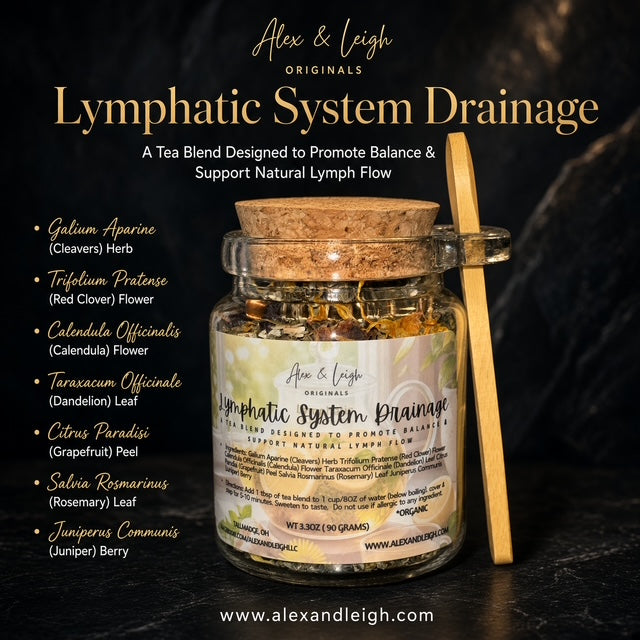
The lymphatic system is your body's quiet custodian — a vast, intricate network of vessels, nodes, and tissues that continuously removes metabolic waste, excess fluid, and cellular debris from every corner of your body. Unlike the cardiovascular system, the lymphatic system has no central pump. It relies entirely on skeletal muscle movement, deep breathing, hydration, and external support to keep its fluid circulating. When lymphatic flow becomes sluggish — through sedentary habits, dehydration, illness, or stress — the results often show up as puffiness, fatigue, dull skin, and a general sense of heaviness.
This blend was developed as a companion to the Lymphatic Drainage Balm — a topical preparation designed for transdermal delivery through infused botanical oils and essential oils. While the balm works externally, absorbed through the skin to stimulate local lymphatic flow, this tea works from within — systemically, through the digestive and circulatory pathways. Internal herbal support and topical application represent two complementary routes of delivery, and when used together they create a more complete, inside-out approach to lymphatic wellness.
The seven herbs in this formula were chosen for their gentleness, their synergy with one another, and their long histories in traditional Western herbalism. Each plant brings a specific affinity for the lymphatic system, whether through direct lymphatic stimulation, diuretic support for kidney elimination, hepatic action for liver detoxification, or circulatory enhancement. This is not a detox fad — it is a carefully considered blend grounded in centuries of herbal tradition and supported by modern phytochemical research.
Cleavers
Galium aparine
Traditional Heritage
Known as "sticky weed," Cleavers is the classic spring lymph mover of Western herbalism, used for centuries in European folk medicine to decongest puffy, sluggish tissues, soothe swollen glands, and support urinary health. Nicholas Culpeper and other herbalists prized it as a springtime blood cleanser.
Key Phytochemicals
- Iridoid glycosides (asperuloside) — lymphatic & anti-inflammatory
- Flavonoids — antioxidant, capillary-protective
- Tannins — astringent, tissue-toning
- Organic acids (citric, gallotannic) — gentle diuretic support
- Vitamin C — immune-supportive antioxidant
Benefits for the Lymphatic System
- Directly stimulates lymphatic drainage and reduces lymph node congestion
- Traditionally used for swollen glands and tonsillitis
- Diuretic action supports kidney elimination of lymphatic waste
- Rich in silica, supporting connective tissue and lymphatic vessel integrity
Additional Benefits
- Supports urinary tract health and may ease mild cystitis
- Shown to have mild antimicrobial activity
- Beneficial for chronic skin conditions with a lymphatic component (acne, eczema, psoriasis)
Precautions for This Herb
- Avoid during pregnancy and breastfeeding (insufficient safety data)
- May interact with blood thinners or blood sugar medications
- Contact dermatitis possible in sensitive individuals
- Best used fresh or recently dried — potency declines with age
Red Clover
Trifolium pratense
Traditional Heritage
Long used in Western herbalism as a "blood purifier," Red Clover has been a cornerstone herb for detoxification and lymphatic stagnation for centuries. Native Americans used it medicinally, and it became prominent in 19th-century eclectic medicine for supporting the body's natural elimination pathways.
Key Phytochemicals
- Isoflavones (genistein, daidzein, formononetin) — phytoestrogenic, anti-inflammatory
- Coumarins — mild blood-thinning, circulatory-supporting
- Flavonoids — antioxidant, capillary-strengthening
- Salicylic acid — anti-inflammatory
- Volatile oils — aromatic, mildly antiseptic
Benefits for the Lymphatic System
- Supports lymphatic circulation and drainage through alterative action
- Promotes toxin elimination through multiple pathways (lymph, liver, kidney)
- Traditionally used for swollen lymph nodes and skin conditions with lymphatic origin
- Anti-inflammatory isoflavones help reduce inflammatory burden on the lymphatic system
Additional Benefits
- Supports bone density and hormonal balance (phytoestrogenic)
- Cardiovascular support — coumarins and isoflavones support healthy cholesterol
- Expectorant properties may support respiratory lymphatic tissue
Precautions for This Herb
- Avoid during pregnancy and breastfeeding (phytoestrogenic activity)
- Avoid if taking blood thinners (warfarin/heparin) — coumarins may potentiate effects
- Those with hormone-sensitive conditions (oestrogen-receptor-positive cancers, endometriosis) should consult a healthcare provider before use
- Do not use with tamoxifen or similar medications
Calendula
Calendula officinalis
Traditional Heritage
Calendula has been used medicinally since at least the 12th century in European herbalism, prized by healers from ancient Egypt to medieval Europe. Often called "the herb of the sun," it was traditionally used both topically and internally for wound healing, inflammation, lymph node swelling, and digestive upset.
Key Phytochemicals
- Triterpene saponins (oleanolic acid glycosides) — anti-inflammatory, lymph-stimulating
- Flavonoids (quercetin, isorhamnetin) — antioxidant, anti-inflammatory
- Carotenoids (lutein, zeaxanthin) — cell-protective antioxidants
- Polysaccharides — immune-modulating
- Essential oils — mild antimicrobial action
Benefits for the Lymphatic System
- Considered one of the best internal herbs for nourishing and cleansing the lymphatic system
- Supports lymphatic circulation particularly in tissues with injury or chronic inflammation
- Reduces lymph node inflammation (lymphadenitis)
- Promotes improved lymphatic drainage through injured or surgically disrupted tissue
Additional Benefits
- Supports digestive health — soothes inflamed gastric mucosa
- Well-researched for wound healing and tissue repair
- Gentle antimicrobial action supports immune function
- Brightens and clarifies skin from within through lymphatic clearing
Precautions for This Herb
- Avoid during pregnancy (may stimulate uterine contractions)
- Those with allergies to the Asteraceae/Compositae plant family (ragweed, chrysanthemums, daisies) may react
- Consult a healthcare provider if taking immunosuppressant medications
Dandelion Leaf
Taraxacum officinale
Traditional Heritage
Dandelion has been used medicinally across European, Chinese, and Native American traditions for over 1,000 years. The leaves were consumed as a spring tonic to "open the channels" of elimination after winter, supporting liver, kidney, and lymphatic drainage simultaneously. Regarded in traditional herbalism as one of the finest whole-body tonics.
Key Phytochemicals
- Taraxacin & taraxacerin (bitter sesquiterpene lactones) — liver-stimulating, digestive
- Inulin (prebiotic fibre) — gut microbiome support
- Flavonoids (luteolin, apigenin) — anti-inflammatory, antioxidant
- Potassium — electrolyte replacement after diuresis
- Vitamins A, C, K — nutritive, antioxidant
Benefits for the Lymphatic System
- Gentle diuretic action opens kidney elimination pathways, supporting lymphatic waste clearance
- Supports liver detoxification, reducing the toxic burden the lymph system must process
- Bitter constituents stimulate bile flow, improving digestive lymphatic (lacteals) function
- Reduces tissue oedema by promoting fluid elimination
Additional Benefits
- Prebiotic inulin supports gut microbiome diversity
- Rich in potassium — replaces what diuretic action eliminates
- Supports healthy blood sugar regulation
- Traditionally used for skin conditions, joint inflammation, and urinary tract health
Precautions for This Herb
- Those with kidney disease should consult a healthcare provider before using diuretic herbs
- May interact with diuretic medications, lithium, and quinolone antibiotics
- Avoid in cases of bile duct obstruction or gallbladder disease
- Asteraceae allergy — patch test or avoid
- Consult a provider if taking blood thinners
Grapefruit Peel, Dried
Citrus paradisi
Traditional Heritage
Dried grapefruit peel has been used in Traditional Chinese Medicine (TCM) as a digestive and liver herb for centuries. In folk medicine across the Caribbean and Mediterranean, citrus peels were added to teas and tonics as bitter digestive stimulants and "blood cleansers," prized for their bright aroma and toning action.
Key Phytochemicals
- Naringin — primary flavanone; antioxidant, anti-inflammatory, metabolic
- Naringenin — bioactive form of naringin; capillary-protective
- Limonene — volatile oil; lymphatic stimulant, hepatoprotective
- Quercetin — powerful antioxidant flavonol
- Vitamin C — immune-supportive, collagen synthesis
- Calcium & Potassium — electrolyte minerals
Benefits for the Lymphatic System
- Stimulates lymphatic drainage through bitter digestive action and bile stimulation
- Naringin and limonene support lymphatic and liver detoxification pathways
- Antioxidant compounds reduce oxidative burden on lymphatic tissues
- Supports gentle metabolic detox through liver and kidney pathways
Additional Benefits
- Supports healthy cholesterol and cardiovascular function (naringin)
- Digestive bitter — stimulates enzyme secretion and reduces bloating
- Uplifting aromatic compounds support mood and mental clarity
- Rich in cytoprotective flavonoids shown to protect neural and immune cells
Precautions for This Herb
- IMPORTANT — Grapefruit interacts with many medications by inhibiting cytochrome P450 enzymes (CYP3A4). This can raise blood levels of statins, calcium channel blockers, immunosuppressants, anticoagulants, certain antidepressants, and many other drugs.
- If you take ANY regular medication, check with your pharmacist or healthcare provider before consuming grapefruit peel
- Use dried peel as a tea
- Phototoxicity is associated with topical grapefruit use, not internal tea consumption
Rosemary
Salvia rosmarinus
Traditional Heritage
Rosemary has been used medicinally since antiquity — ancient Greeks, Romans, and Egyptians used it as a circulatory and memory herb. Hippocrates and Dioscorides recorded its use for liver ailments and blood cleansing. In European folk medicine it was a cornerstone herb for improving blood flow to the extremities and invigorating sluggish systems.
Key Phytochemicals
- Rosmarinic acid — potent antioxidant, anti-inflammatory
- Carnosic acid & carnosol — hepatoprotective, neuroprotective antioxidants
- Ursolic acid — anti-inflammatory, anti-tumour in lab settings
- 1,8-Cineole (eucalyptol) — circulatory, respiratory, anti-inflammatory
- Flavonoids (luteolin, apigenin) — anti-inflammatory
Benefits for the Lymphatic System
- Stimulates peripheral circulation, encouraging lymphatic fluid movement
- Hepatoprotective compounds support liver detoxification — reducing the lymph system's toxin load
- Anti-inflammatory action reduces systemic inflammation that can congest lymphatic pathways
- Traditionally used to invigorate "sluggish" and stagnant systems
Additional Benefits
- One of the most potent antioxidant herbs studied (rosmarinic acid)
- Supports cognitive function and memory
- Digestive stimulant — improves digestion and reduces bloating
- Antimicrobial properties support immune defence
Precautions for This Herb
- Avoid medicinal doses during pregnancy (culinary amounts are safe)
- May interact with blood thinners, ACE inhibitors, and diuretics at therapeutic doses
- Those with epilepsy should avoid high doses
- Do not use simultaneously with lithium
Juniper Berry
Juniperus communis
Traditional Heritage
Juniper berry has one of the longest recorded histories in herbal medicine — used by ancient Egyptians, Greeks, Native Americans, and throughout European folk medicine. Traditionally used as a urinary antiseptic, digestive tonic, and detoxifying herb. Its volatile oils made it a natural antiseptic in traditional wound and infection care.
Key Phytochemicals
- Terpinen-4-ol — primary diuretic compound; stimulates kidney filtration
- Alpha-pinene & sabinene — anti-inflammatory volatile oils
- Flavonoids (quercetin, amentoflavone) — antioxidant
- Proanthocyanidins — urinary tract protective
- Resins & organic acids — digestive, antiseptic
Benefits for the Lymphatic System
- Diuretic action (via terpinen-4-ol) supports kidney clearance of lymphatic waste products
- Anti-inflammatory volatile oils reduce systemic inflammatory burden
- Detoxifying compounds support the body's natural waste elimination through urinary pathways
- Traditionally used to "flush" the system and support metabolic cleansing
Additional Benefits
- Urinary tract antiseptic — traditionally used for UTIs and cystitis
- Digestive stimulant — reduces bloating and supports enzyme activity
- Antioxidant flavonoids protect cells from oxidative stress
- Antimicrobial and antifungal properties support immune defence
Precautions for This Herb
- DO NOT USE during pregnancy — uterine stimulant; may cause miscarriage
- Avoid if you have kidney disease — volatile oils can irritate damaged kidney tissue
- Avoid with diuretic medications — may potentiate effect dangerously
- Limit use to 4–6 weeks at a time with rest periods
- Children under 12: avoid without healthcare guidance
- Do not consume juniper essential oil — only dried berries as tea
How to Brew Your Lymphatic Flow™ Tea
Slow steeping extracts the full spectrum of water-soluble plant compounds.
Brewing a Single Cup
🫖 Measure
Use 1 heaped teaspoon (approx. 2–3g) of the loose blend per 250ml of water.
💧 Water Temperature
Use just-off-the-boil water (approx. 90–95°C / 194–203°F). Do not use a rolling boil — this destroys delicate volatile compounds.
⏱️ Steep Time
Cover and steep for 10–15 minutes. Covering is essential to retain volatile aromatic compounds (especially from rosemary and grapefruit peel).
🧃 Strain & Sip
Strain through a fine mesh strainer or tea infuser. Drink slowly while warm.
Recommended Intake
2–3 cups per day, taken with or after meals. Do not exceed 3 cups daily.
Allow a rest period of 1 week after every 4–6 weeks of regular use.
Optional Additions
- •A slice of fresh lemon — adds vitamin C and brightness
- •A small amount of raw honey — if you prefer a touch of sweetness
- •A thin slice of fresh ginger — warming, with additional digestive support
Storage
Store loose blend in a sealed paper bag, dark glass or tin container, away from heat, light, and moisture. Best used within 12 months of blending.
🌿 INCI Ingredient List
Galium Aparine (Cleavers) Herb Trifolium Pratense (Red Clover) Flower Calendula Officinalis (Calendula) Flower Taraxacum Officinale (Dandelion) Leaf Citrus Paradisi (Grapefruit) Peel Salvia Rosmarinus (Rosemary) Leaf Juniperus Communis (Juniper) Berry